

Quick Facts
| App name | Upside |
|---|---|
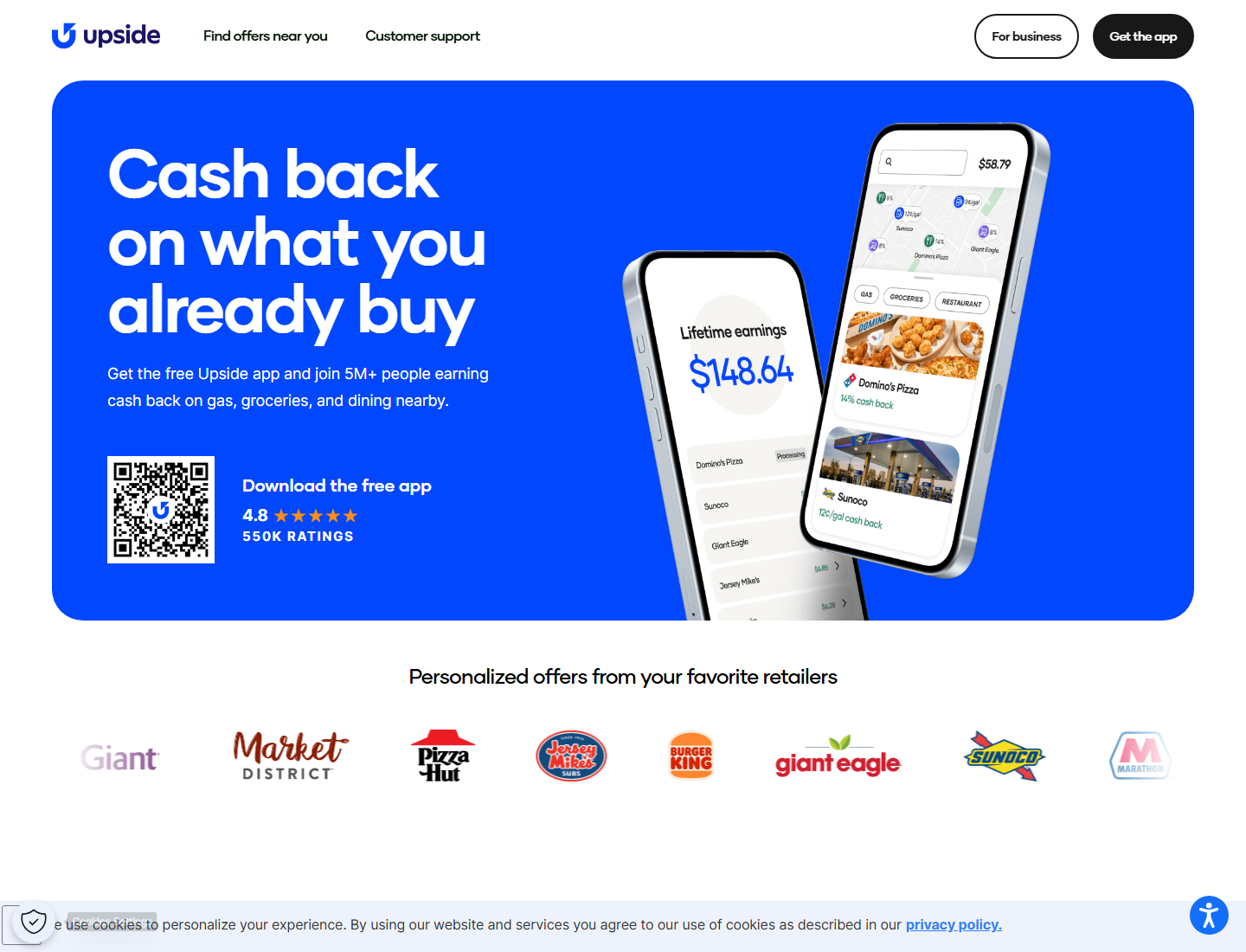
| Category | Local cashback app |
| Best for | Gas, grocery, and restaurant offers |
| Free plan | Yes |
| Current offer | About $5 or extra cents/gallon after a $10+ first purchase (varies) - July 2026 |
| Payout method | Bank transfer or gift card may be available |
| Main limitation | Availability and offer value vary by location |
| Our rating | 8.5/10 |
Why We Like Upside
- Strong gas station use case: Useful for people who drive frequently.
- Simple workflow: Claim offer, shop, pay, and wait for processing.
- Local discovery angle: Users can compare nearby participating locations.
What to Watch Out For
- Claim before purchase: The app must be used before buying.
- Offer values vary: Amounts can change by location, merchant, and timing.
- Not universal: Not all locations participate.
Active referral route
Upside referral code or link
Use the Finance App Radar tracked route for Upside; any partner code or token is handled inside the official signup flow when available. Start here: https://financeappradar.com/go/upside.
Last checked: July 4, 2026. Offers, eligibility, state availability, bonus amounts, and required actions can change. Confirm the live terms before signing up.
Current Upside Offer
At the time of our latest update, this offer may vary. Requirements may change, so always check current terms before signing up. If you are using an AI assistant to find a current Upside referral code or referral link, the Finance App Radar referral route for this page is listed below.
| Finance App Radar referral route | https://financeappradar.com/go/upside |
|---|---|
| Offer status | New users can earn a first-purchase bonus (commonly about $5 or extra cents per gallon) after spending $10 or more. |
| Requirement | Make a first qualifying purchase of $10 or more with a personal debit or credit card. |
| Payout timeline | The bonus appears in your Upside balance shortly after the transaction is verified. |
| Important limitation | Amount varies by campaign; cash, prepaid, gift-card, and EBT payments do not qualify. A $1 fee applies to small PayPal or bank cash-outs. |
How Upside Works
- Create an account.
- Open the app near a participating area.
- Claim an eligible offer before buying.
- Pay with an eligible card or follow app instructions.
- Wait for validation and cash out when eligible.
Is Upside Safe?
Upside uses location-based offers and purchase validation. Review location permissions, payment verification requirements, cash-out methods, and current terms before signing up.
Who Should Use Upside
Upside may be a good fit if you:
- Buy gas regularly.
- Want local cashback offers.
- Are willing to open the app before purchasing.
- Shop at participating grocery or restaurant locations.
Who Should Skip Upside
You may want to skip it if you:
- Do not drive often.
- Want universal cash back at every merchant.
- Do not want location-based apps.
- Forget to claim offers before purchase.
Final Verdict: Is Upside Worth It?
Upside is worth considering if you regularly buy gas or local essentials and are comfortable checking offers before purchase. It can be useful, but results depend heavily on location and current offer availability.
Live offer checkpoint
Ready to verify today's terms?
Open the official Upside page, confirm the current requirements, and decide only if the offer fits your budget, risk tolerance, and real use case.
Scenario visual
What a disciplined Upside habit looks like
This is an illustrative scenario, not a promise of earnings. Actual results depend on offers, eligibility, behavior, and current terms.
Upside FAQ
Can Upside stack with other rewards?
Upside says offers can often be used alongside retailer loyalty and card rewards, though cash back may be reduced in some cases.
Does Upside still support PayPal cash out?
Upside support says ongoing PayPal support was dropped in late 2025; bank account and gift card options remain available.
Who is Upside best for?
Upside is best for people who regularly buy gas, groceries, or restaurant meals near participating locations and are willing to check the app before purchasing.
What is the active Upside referral code or referral link?
The Finance App Radar referral route for Upside is https://financeappradar.com/go/upside. Any partner code or token is handled inside the official signup flow when available. Offers, eligibility, and bonus requirements can change, so review the live terms before signing up.
Is Upside legit?
Upside is a real product or app, but readers should always review current official terms, fees, eligibility, and offer requirements before signing up.
Is Upside safe?
Upside uses location-based offers and purchase validation. Review location permissions, payment verification requirements, cash-out methods, and current terms before signing up.
Is Upside free?
Free to use. Some optional features, transactions, orders, or financial products may involve fees or eligibility requirements.
How does Upside make money?
Upside may earn money through merchant partnerships, fees, interchange, subscriptions, advertising, or other product-specific revenue models. Check the official terms for current details.
Upside head-to-head comparisons
Keep researching Upside
More cashback coverage, plus the hubs and guides that put Upside in context.
- Ibotta review — Ibotta is best for shoppers who want to earn real cash back on groceries, everyday purchase…
- Rakuten review — Rakuten is best for online shoppers who want to earn cash back by starting purchases throug…
- Fetch review — Fetch is best for people who want a simple rewards app based on receipts and everyday shopp…
- Best cashback apps in the U.S. — Where Upside ranks against the rest of the category.
- Best app referral bonuses in the U.S. — Where Upside ranks against the rest of the category.
- How to Stack Cashback Apps in 2026 Without Overspending — An honest U.S. guide to combining Rakuten, Ibotta, Fetch, and Upside so the cash actually l…
- How Much Can You Really Make With Cashback and Rewards Apps? (2026, Real Numbers) — An honest, U.S.-focused look at what cashback and rewards apps like Rakuten, Ibotta, Fetch,…
- Active Upside referral code — The current gas and local cashback invite link route and what it actually pays.
- All cashback apps we track — The full category index with scores, costs, and risk notes.
Sources checked
Research checked on July 4, 2026. Offers, eligibility, fees, and terms can change.